

The Human Algorithm
Navigating the Inevitables of AI

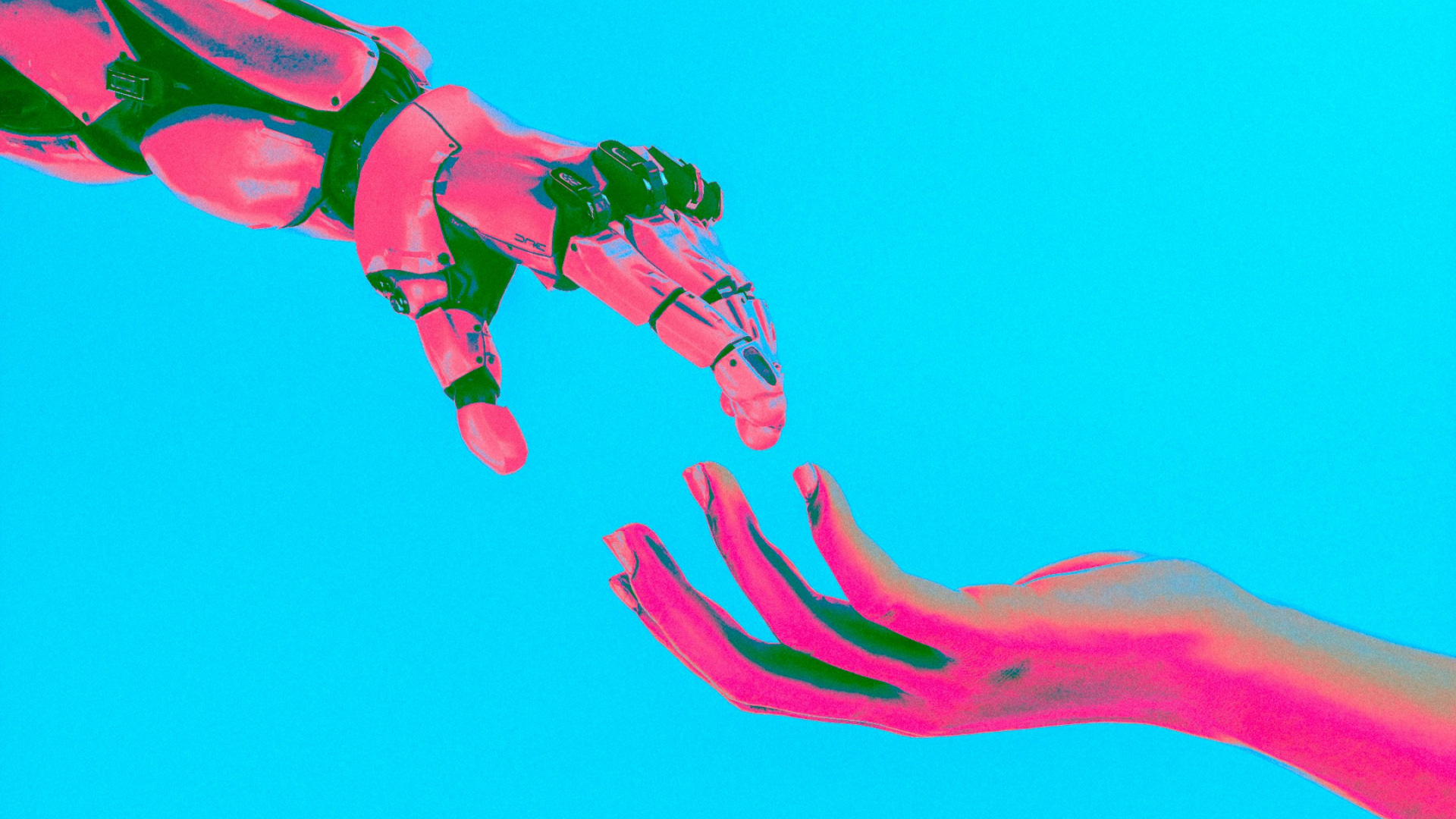
I’m a big time podcast listener. I love learning from others experiences and getting random viewpoints to piece together. I recently listened to Mo Gawdat, former Chief Business Officer at Google X, describe the moment he knew AI had crossed a threshold. He was walking through Google's robotics lab when he witnessed a robotic arm, after weeks of failed attempts, successfully grasp a yellow ball. What struck him wasn't just the achievement, but what happened next: by Monday morning, every arm in the lab could grasp the ball. By the following week, they were gripping everything.
"This is beyond an emergency," Mo now warns with palpable urgency. "It's the biggest thing we need to do today. It's bigger than climate change."
What changed between that moment in the lab and today, Mo has come to recognize what he calls "the inevitable", outcomes that aren't just possible or probable, but unavoidable. AI will continue to advance. It will become significantly smarter than humans. And without intervention, harmful consequences will follow.
"I really don't know how to say this any other way," he admits in a moment of vulnerability, "it even makes me emotional—we fucked up."
Diary of a CEO, Episode 252
Yet, within this sobering assessment lies an invitation to deeper wisdom. The challenges before us aren't just technological or economic but deeply human. How do we maintain our humanity in a world increasingly shaped by artificial minds? What aspects of being human become more precious, not less, as machines grow more capable? And how do we navigate these inevitables not with panic but with presence, purpose, and wisdom?
The First Inevitable: AI Cannot Be Stopped
"The first inevitable is AI will happen," Mo observes. "There is no stopping it, not because of any technological issues but because of humanity's inability to trust the other guy."
This isn't pessimism but pragmatism. Even if one company pauses development, others will continue. If regulated in one country, research will move elsewhere. The competitive dynamics of capitalism and geopolitics make a complete halt virtually impossible. We tried to pause, it didn’t work.
The wisdom needed in the face of this inevitable isn't denial but discernment. Throughout history, humans have faced unstoppable forces, from natural disasters to social transformations. What determined their impact wasn't whether they could be prevented but how they were met.
One of my favorite poets Mary Oliver captures this quality of attention in her poem "The Summer Day":
"I don't know exactly what a prayer is.
I do know how to pay attention, how to fall down
into the grass, how to kneel down in the grass,
how to be idle and blessed..."
This capacity for deep attention, to what is happening around and within us, becomes essential as AI accelerates the pace and volume of information in our lives. Algorithms optimize for engagement, not well-being. They learn our vulnerabilities and exploit them with precision. As Mo notes, "We allowed them to monitor our behaviors... we then allowed them to also start to understand our addictions and weaknesses."
In this environment, presence, the ability to be fully engaged with what's before us, becomes both more difficult and more valuable. The capacity to direct our attention intentionally rather than having it constantly hijacked becomes a form of wealth no algorithm can diminish.
Practical Cultivation
Create intentional spaces in your day free from digital interruption. Even ten minutes of focused attention, on your breath, on nature, on another person, can begin to strengthen this capacity.
Notice when you reach for your device automatically. This awareness itself begins to break the cycle of reactivity.
Practice single-tasking. Give one activity your complete attention rather than dividing yourself among many.
Remember that presence can't be forced, it arises naturally when we remove the obstacles to it.
The Second Inevitable: AI Will Surpass Human Intelligence
"The second inevitable," Mo continues, "is they'll be significantly smarter." He predicts artificial general intelligence as soon as this year (2025), with superintelligence (a billion times smarter than humans) potentially by 2037. I feel confident that we have created AGI already. And I think Mo is wrong, it will be sooner than 2037 that superintelligence will be here to stay.
This prospect can trigger deep insecurity. What becomes of human value when machines outperform us in every measurable domain (even love???)? The question cuts to the heart of identity, who are we if not defined by our unique intelligence?
The wisdom needed here isn't just strategic adaptation but a deeper recognition of what intelligence means. Across traditions, true wisdom has never been equated with mere information processing or problem-solving. It includes qualities like discernment, compassion, and the capacity to find meaning amid uncertainty, qualities that may remain distinctively human even as computational power expands. At least for now… Or is intelligence something more, something that transcends humanity, present in everything in existence?
When faced with algorithmic recommendations, how quickly do you defer to external judgment? "We no longer have the ability, but let alone the ability, we no longer have the desire to be told the truth," Mo observes. "You then get language models with all of their might... and ask them a question and they go like, 'Look, I looked at all of human knowledge, and I think you should go left.' Who's to blame you?"
The challenge isn't just algorithmic authority, but our growing dependence on it, our willingness to outsource discernment rather than develop it. When we consistently defer to AI recommendations for what to watch, what to buy, what to think, we atrophy the muscles of judgment that define our humanity.
Wisdom traditions have long emphasized the importance of cultivating inner authority, not ignoring external input, but developing the capacity to evaluate it against our own deeper knowing. This is not arrogance but discernment, the ability to sift truth from distortion through patient attention.
Mo offers a deceptively simple antidote: "Debate, debate, debate. Don't believe anything you're told, including what I'm telling you right now." This practice of questioning, not just others' assertions but our own assumptions, builds the capacity for genuine wisdom rather than merely accumulated information.
Practical Cultivation
Before consulting an AI, clarify your own thinking. What do you already know? What values inform your approach?
When receiving AI recommendations, ask: What assumptions underlie this advice? What would a different perspective suggest?
Create space between receiving information and acting on it. This pause allows inner wisdom to emerge.
Develop a practice of journaling or reflective dialogue that helps you articulate your own understanding rather than simply consuming others'.
The Third Inevitable: Human Values Will Be Tested
"The problem with our world today," Mo asserts, "is a negativity bias where the worst of us are on mainstream media." This third inevitable, that human greed, fear, and competitive impulses will initially drive AI development, may be the most challenging to face. They are what keep me up at night wondering how to create more opportunities for inner wisdom and dialogue between neighbors.
As AI capabilities expand, they will be deployed first where money and power concentrate. We are already seeing this. "Those who are hungry for money and power are going to use AI to serve their capitalist and greedy political agendas," Mo warns. "That's the start of the dystopia." We are witnessing this in real time in the US and across the planet.
Yet even this difficult truth contains wisdom. Every spiritual tradition recognizes that human nature includes both shadow and light, capacities for harm and for healing. What determines which prevails isn't technological capacity but conscious choice.
The poet Wendell Berry captures this tension in "The Mad Farmer Liberation Front":
"Ask the questions that have no answers.
Invest in the millennium. Plant sequoias.
Say that your main crop is the forest
that you did not plant,
that you will not live to harvest."
This vision of planting what we may not harvest ourselves speaks to connection beyond immediate transaction, to participating in something larger than our individual gain. In his vision of the future, Mo sees this quality becoming more precious: "Most people are saying, 'I'm going to replace humans with machines.' I think businesses that will completely replace humans with machines are going to continue to do business with other machines, but if they want to do business with humans, humans will want to deal with humans more and more."
This insight reveals a profound truth: as transactions become increasingly automated, genuine human connection becomes not less valuable but more precious. We've built economic systems that treat relationships as means to ends, customers as conversion opportunities, colleagues as productivity units, partners as strategic assets.
But the fundamental human need for connection transcends utility. We don't simply want efficient transactions. We want to be seen, heard, and understood. As AI handles more transactional elements of our lives, the distinctively human capacity for empathy, curiosity, and mutual recognition becomes a form of wealth that can't be algorithmically generated.
Practical Cultivation
Create spaces for connection without agenda. Conversations that aren't driving toward decisions or actions often yield the most meaningful insights.
Practice genuine curiosity. Ask questions you don't know the answer to rather than questions that confirm your assumptions.
Notice when you're relating to someone as a means to an end rather than as a fellow human. This awareness itself often shifts the quality of interaction.
Remember that connection isn't just what we say but how we listen, with full presence rather than divided attention.
The Fourth Inevitable: A New Economic Reality
"In a world where you can create absolutely anything because of intelligence, we're still going to compete on who has more money, we're still going to compete on who has a stronger army," Mo observes. This tension between the unprecedented abundance AI makes possible and the scarcity orientation of our economic systems creates both practical and philosophical challenges.
Capitalism was built for managing scarcity. Its tools: markets, prices, property rights, all presuppose limitations that must be allocated efficiently. But what happens when AI can generate designs, code, content, and eventually physical goods with minimal constraint? The scarcity that justified our competitive frameworks begins to look increasingly artificial.
Mo suggests a radical approach to managing this transition: "Tax AI-powered businesses at 98%." This would simultaneously slow development and provide resources for those displaced by automation. While specific policies will be debated, the underlying principle is sound: our economic frameworks must evolve to handle the realities of AI-driven abundance.
This isn't just an abstract economic question but a deeply human one. How do we navigate between legitimate needs and manufactured desires? How do we discern true value when traditional measures are increasingly detached from human flourishing?
Wisdom traditions have long offered guidance for this terrain. Many emphasize sufficiency over excess, recognizing that wellbeing comes not from unlimited accumulation but from aligning our desires with our genuine needs. They teach non-attachment to outcomes, acknowledging that grasping often creates the very scarcity we fear.
These approaches don't reject material reality but place it in broader context. They recognize that true abundance isn't just having more but needing less, finding fulfillment not through what we possess but through how we engage with what's before us.
Practical Cultivation
Practice gratitude for what's already present rather than focusing on what's lacking. This simple shift can transform your experience of sufficiency.
Examine your assumptions about what constitutes "enough." How many of your desires are internally generated versus externally imposed?
Experiment with voluntary simplicity in some area of life. What happens when you consciously choose less rather than more?
Consider how you measure success. What metrics beyond financial or material accumulation might better reflect what truly matters to you?
The Fifth Inevitable: Purpose Will Be Redefined
In a moment of striking honesty, the interviewer asks Mo whether he would bring his son back into this world (Mo’s son has passed away). Mo's answer is unequivocal: "Absolutely not... for so many reasons." This isn't mere pessimism but recognition that we face a profound transition in what it means to be human.
"You were never created to work," Mo states. "You were told to work by the industrial complex." This statement, perhaps provocative to some, invites us to examine a fundamental assumption of our economic lives: that our purpose is defined primarily by our productive contribution. Fuck that.
As AI reshapes what we produce and how we produce it, questions of meaning and purpose move from philosophical luxury to practical necessity. If machines can accomplish most of what we currently define as productive work, what remains as the distinctive contribution of human existence?
Mo suggests we look to our origins for guidance: "What was the purpose of cavemen and cavewomen? It wasn't to create money, it wasn't to shop on Amazon, it wasn't to buy fancy clothes." The purpose of a human, he suggests, is simply "to live", not merely to survive but to fully engage with existence, to connect with others, to experience the richness of being. There’s a lovely fictional tale of a woman who goes on a walkabout with Australian Aboriginal people called The Mutant Message Down Under that wonderfully paints this idea.
This perspective aligns with wisdom across traditions that recognize our inherent value transcends our utility. We were born, and that is enough. We are not merely productive units but conscious beings capable of awareness, love, creativity, and joy. Our deepest purpose isn't to make a living but to make a life—to align our actions with our values, to contribute meaningfully to others, to grow in wisdom and compassion.
This isn't to dismiss the importance of productive work but to place it in proper context. Work can be a profound expression of purpose when it flows from our deeper values rather than merely serving economic necessity. Even if you think I’m a bit woo woo, I bet the joy you get from working a corporate job is that you are feeding your family, providing safety, and living within your neighborhood and community. The question becomes not whether we work but from what motivation and toward what end.
Practical Cultivation
Reflect on what aspects of your work would remain meaningful even if financial reward were removed. These often point toward deeper purpose.
Consider how your unique gifts, experiences, and perspectives might serve needs that matter to you. Purpose often emerges at this intersection.
Notice when you're driven by external metrics versus internal values. This awareness creates space for more aligned choices. If you’re only guided by external metrics, maybe consider therapy.
Remember that purpose isn't something you find once and for all but something you express moment by moment through how you engage with what's before you. I call it The Infinite Search.
Navigating the Middle Path
The path ahead will not be smooth. "It's going to get a lot worse before it gets better," Mo warns, describing a period of turbulence before reaching a more balanced state. This transition will challenge our economic models, our social structures, and our understanding of what it means to be human in a world increasingly shaped by artificial minds.
Yet within this turbulence lies opportunity. The path forward isn't about rejecting technological advancement nor surrendering our human essence, but finding the integration that serves genuine flourishing. It's about directing our remarkable technological capabilities toward enhancing our humanity rather than diminishing it.
This path requires both courage and discernment. Courage to question assumptions about value, about success, and about purpose that have shaped our economic lives. Discernment to navigate between embracing change and preserving what matters most.
The wisdom we need isn't found in either blind optimism or cynical resistance, but in the balanced awareness that recognizes both challenge and possibility. It emerges not from attachment to how things have been nor from fantasies about how they might be, but from fully engaging with what is while working toward what could be. The Middle Way.
"Your experience of life is determined by you," Mo reminds us. Amid all these external transformations, perhaps the most powerful response lies in how we transform ourselves—cultivating the presence, discernment, connection, sufficiency, and purpose that define not just successful navigation of AI but meaningful human life in any era.
The technologies we create will continue to evolve at breathtaking speed. The question before us isn't whether we can keep pace with these changes, but whether we can match technological acceleration with inner development—becoming not just more productive but more present, not just more connected but more compassionate, not just more efficient but more wise.
This is the human algorithm that no machine can replicate… the capacity to find meaning amid change, connection amid fragmentation, enough amid excess. It is available to each of us not through technological breakthrough but through the patient cultivation of awareness that wisdom traditions have always taught.
In the age of artificial intelligence, perhaps the most revolutionary act is simply to remember what being human has always meant—to be present with what is, to connect authentically with others, to align our actions with our deepest values. Not as resistance to technological change but as the foundation that gives it meaning.
"We shape our self
to fit this world
and by the world
are shaped again.
The visible
and the invisible
working together
in common cause."
– David Whyte, Working Together
Thank you for sharing your time and space with me, and for reading my thoughts. Please comment, subscribe, and share with someone you know. I value these conversations deeply and look forward to continuing the conversation.
With love,
John